
What is microclimate?
The International Prevention and Treatment of Pressure Ulcers/ Injuries Clinical Practice Guideline, define microclimate as: the temperature, humidity and air flow next to the skin surface¹.
The National Pressure Injury Advisory Panel Support Surface Standards Initiative (S3I) define microclimate for the purposes of support surfaces: temperature and humidity/moisture in a specified location at the support surface/body interface³.
Managing or controlling microclimate is a key factor for patients at risk of maceration and skin breakdown².


Arjo Support Surface Selection Guide
Choose a support surface with ease. Our step-by step
guide helps you quickly and effectively determine the most
suitable option for patients in your care.
Managing microclimate
The International Guidelines¹ discuss how managing microclimate can provide an environment conducive to injury prevention and tissue repair. As such, the guidelines recommend the need for additional features such as the ability to control moisture and temperature when selecting a support surface. Options could be a system which has an integrated microclimate feature or an adjunctive technology which uses Negative Airflow Technology (NAT) to continually draw away excess moisture from the skin/surface interface.

Skin IQ Microclimate Manager - Advanced microclimate control solutions
Skin IQ™ coverlets actively draw excess heat and moisture away from the skin. This helps maintain an optimal microclimate and supports effective Pressure Injury Prevention.
Why is managing the skin-surface microclimate important for preventing and managing pressure injuries?
Elevated temperature and humidity can affect the structure and function of the skin⁴. This reduces the skin and tissue tolerance, exposing it to the damaging effects of pressure, shear and friction⁵.
Excessive moisture against the skin causes maceration which reduces stiffness, and connective tissue strength and increases the susceptibility to shear forces⁷.
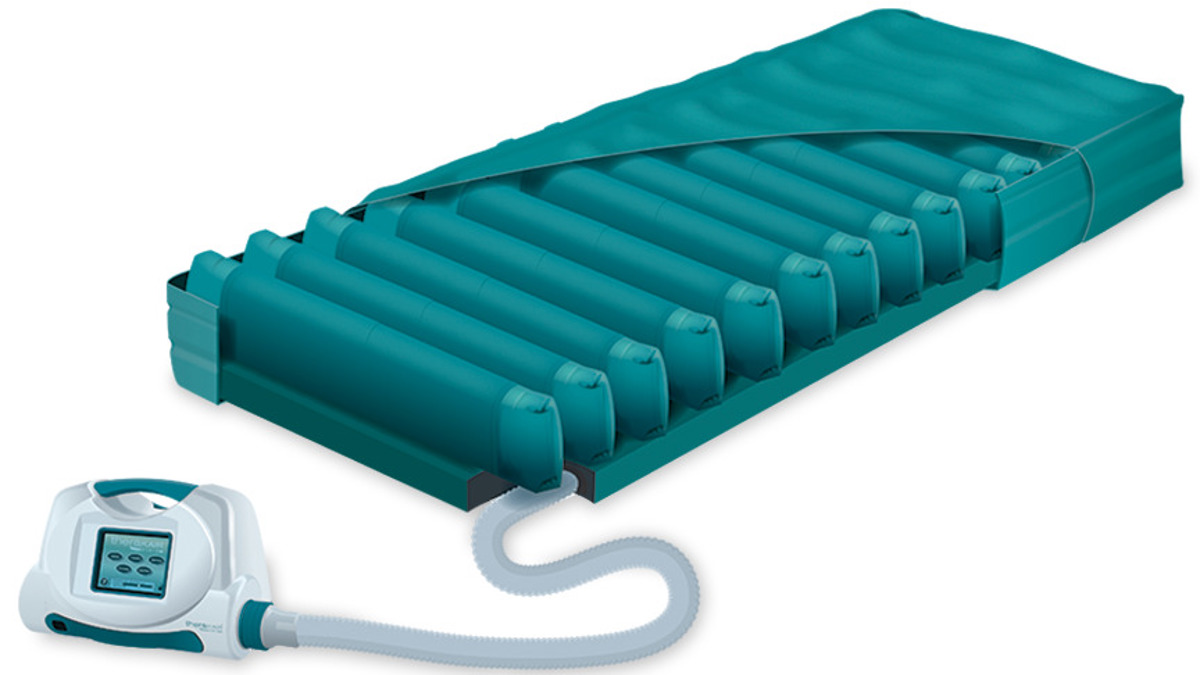
Continuous Low Pressure with Low Air Loss for optimal skin protection
Experience consistent microclimate control with Low Air Loss technology that helps regulate heat and humidity at the skin’s surface. Designed to support patient comfort while reducing key risk factors associated with pressure injuries.

Your timely intervention is key
Timely intervention is essential in stopping pressure injuries before they develop.
With the right solutions in place – from advanced support surfaces to microclimate management technologies – you can protect patients, ease the burden on staff and reduce the cost of care.

Modifying microclimate
Skin IQ™ Microclimate Management Coverlet in use for 15+ years on 1,000's of patients

The importance of managing microclimate in pressure injury prevention and management
The temperature and humidity at the skin’s surface - is a critical yet often underestimated factor in pressure injury prevention. When heat and moisture build up, the skin becomes more fragile, less tolerant to pressure, shear and friction, and more prone to breakdown. Effective microclimate management, supported by evidence‑based guidelines, helps create a healthier skin environment and plays an essential role in both preventing injuries and supporting healing.
_Blog%20Image.jpg)
La gamme Arjo pour la prévention des escarres
Des surfaces thérapeutiques et de la gestion du microclimat à la détection précoce et objective des risques, nous proposons des innovations de pointe conçues pour vous assister dans la prévention et le traitement des escarres dans tous les environnements de soins.
-
National Pressure Ulcer Advisory Panel, European Pressure Ulcer Advisory Panel and Pan Pacific Pressure Injury Alliance. Prevention and Treatment of Pressure Ulcers: Clinical Practice Guideline. Emily Haesler (Ed). Cambridge Media: Perth, Australia; 2019.
-
International review. Pressure ulcer prevention: pressure, shear, frictionand microclimate in context. A consensus document. London: WoundsInternational, 2010.
-
Support Surface Standards Initiative (S3I) Subcommittee of the NPIAP.Terms & Definitions related to Support Surfaces. 2025.
-
Kottner J, Black, J, Call, E, Gefen, A, Santamaria N (2018) Microclimate: a critical review in the context of pressure ulcer prevention.
-
Clark M, Black J (2011) Skin IQTM Microclimate Made Easy. Wounds International 2011; 2(2). Available from http://www.woundsinternational.com