Rethinking dementia care: why movement, environment and human-centered design matter
Dementia is one of the fastest-growing global health challenges of our time. More than 57 million people are currently living with dementia worldwide and it affects over 60 percent of residents in long-term care facilities. As populations age, the number of people living with dementia continues to rise, placing increasing pressure on long-term care systems, healthcare providers, and caregivers alike.
The hidden impact of immobility
Dementia is not only a cognitive condition, it also has profound physical implications. As the disease progresses, individuals often become less active due to disorientation, reduced confidence, or limitations within the care environment.
This gradual reduction in movement can have significant consequences. Physical inactivity is closely linked to muscle weakness, reduced balance, and increased dependency. Over time, individuals may lose the ability to perform even basic daily activities, accelerating the transition from independence to full reliance on care.
As Ulrika Olsson, VP Global Academy at Arjo and an experienced physiotherapist, explains:
“Dementia care has traditionally focused on cognitive decline, but we need to take a more holistic view. Physical function, movement, and the care environment all play a critical role in maintaining quality of life and dignity.”
This broader perspective is essential because immobility does not just accompany dementia – it can actively worsen outcomes.
Why movement matters
Evidence from rehabilitation and clinical practice shows that even small amounts of regular movement can have a significant impact. For people living with dementia, supporting safe and appropriate activity throughout the day can help maintain strength, improve balance, and enable greater participation in daily life.
This is not about intensive rehabilitation programs alone. It is about embedding movement into everyday care, helping someone sit up, supporting a transfer, or creating opportunities to engage physically with their surroundings.
When these moments are missed, the consequences accumulate. Reduced activity leads to greater physical decline, which in turn increases dependency and limits future mobility. Breaking this cycle is a key priority for care providers.
“We know that immobility can have a profound impact on outcomes, even over short periods of time,” says Ulrika Olsson. “By enabling safe, consistent movement in daily care routines, we can help slow physical decline and make a meaningful difference to residents’ everyday lives.”
Enabling movement in dementia care
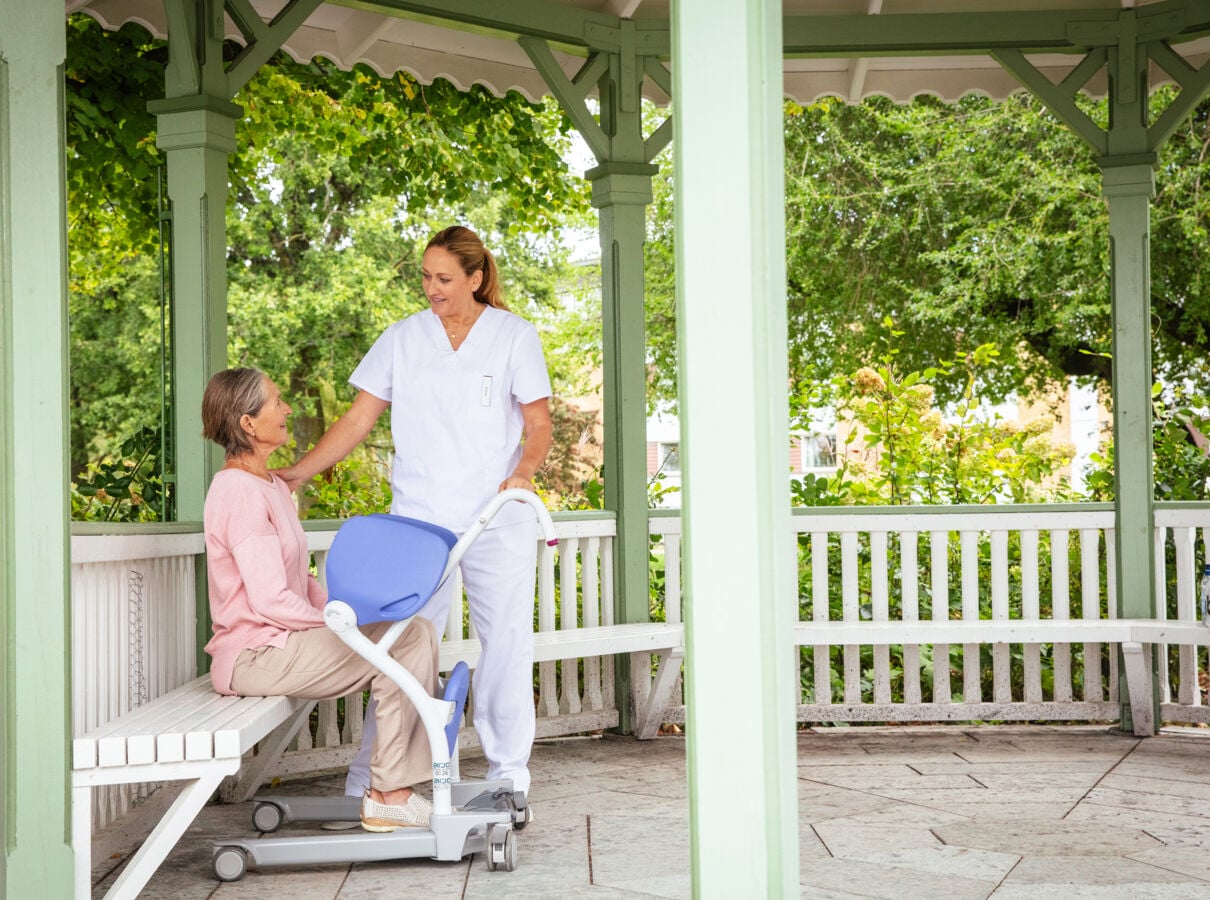
Improving dementia care requires recognizing the role movement plays in maintaining function and independence. By integrating movement into everyday care practices, providers can help individuals maintain their functional ability for longer. This includes supporting repositioning, assisted transfers, and opportunities for upright positioning, ensuring that each person can move at a level that is safe and appropriate for them.
Equally important is the role of caregivers. Staff in dementia care settings often face significant pressures, including limited time, physical demands, and safety concerns. Without the right support, incorporating movement into care can be difficult to sustain.
Providing the right tools and workflows can help reduce this burden, making it easier for caregivers to deliver mobility-focused care while protecting their own wellbeing.
A more human-centered model of care
Movement in dementia care is not just about physical outcomes. It also has a powerful effect on mental health. Being upright, engaged, and able to participate in even small activities can improve orientation, reduce distress, and create a greater sense of normality. These moments contribute to a care environment that feels calmer, more positive, and more dignified.
At its core, this is about shifting from a model of care that focuses purely on tasks to one that prioritizes the person.
“Caregivers are at the heart of dementia care,” says Ulrika Olsson. “When we give them the right support and solutions, we’re not just improving efficiency, we’re creating the conditions for more meaningful, human-centered care every day.”
As the global burden of dementia continues to grow, the need for new approaches has never been greater. Addressing this challenge will require a combination of system-level thinking and practical, everyday change. By embedding movement into daily care, we can help ensure that dignity, independence, and quality of life remain at the center of dementia care.
Discover more about how to enable mobility in dementia care and support better outcomes for residents and caregivers alike. Dementia Care | Arjo
References
Alzheimer’s Disease International. World Alzheimer Report 2018. London: Alzheimer’s Disease International; 2018.
World Economic Forum. Dementia is rising fast – 5 ways to protect your brain. Geneva: World Economic Forum; 2026.
World Economic Forum. The Brain Economy: Brain health, brain capital and the future of mental well-being. Geneva: World Economic Forum; 2025.