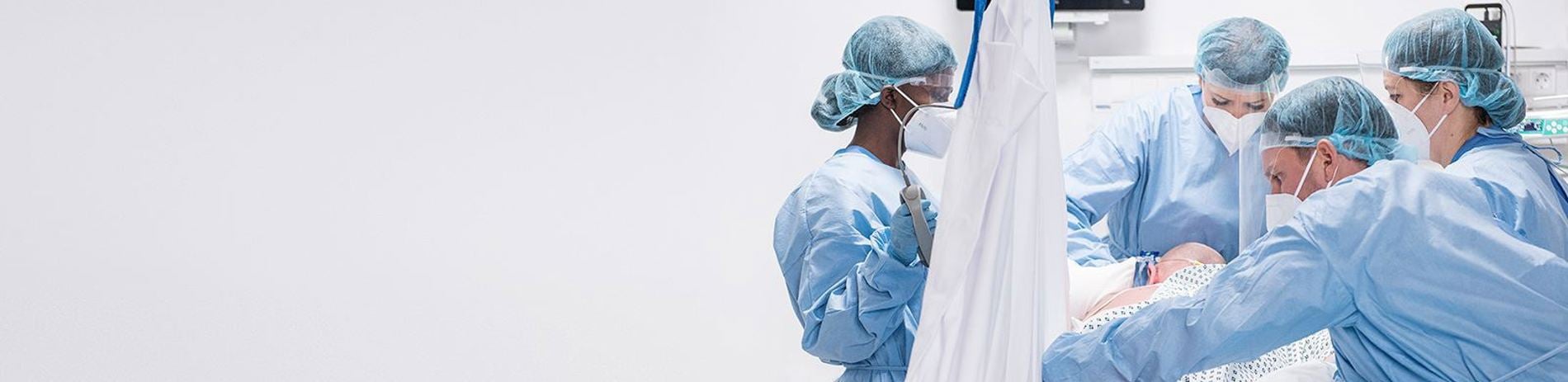
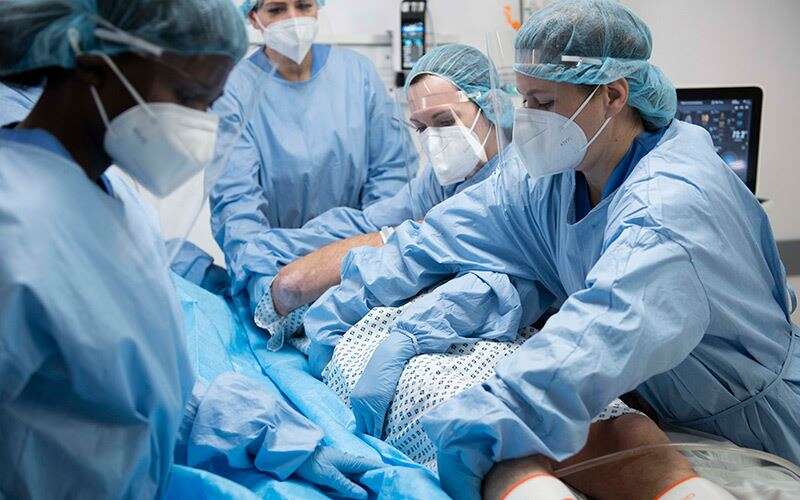
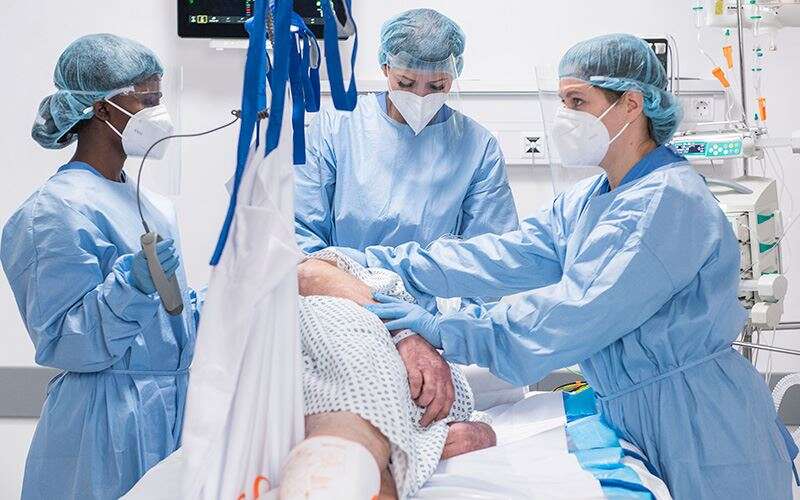

Drehen in und aus der Bauchlage
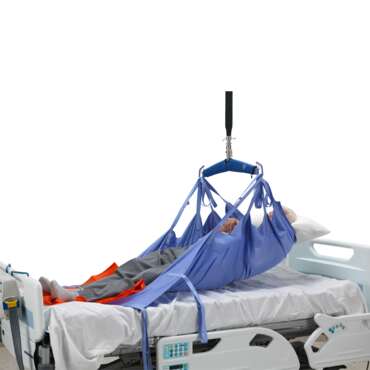
Prone positioning involves turning a patient onto their chest. This may sound like a straightforward task. However, clinicians appreciate that this can be a complex, labour-intensive manoeuvre that can put both patients and caregivers at risk.
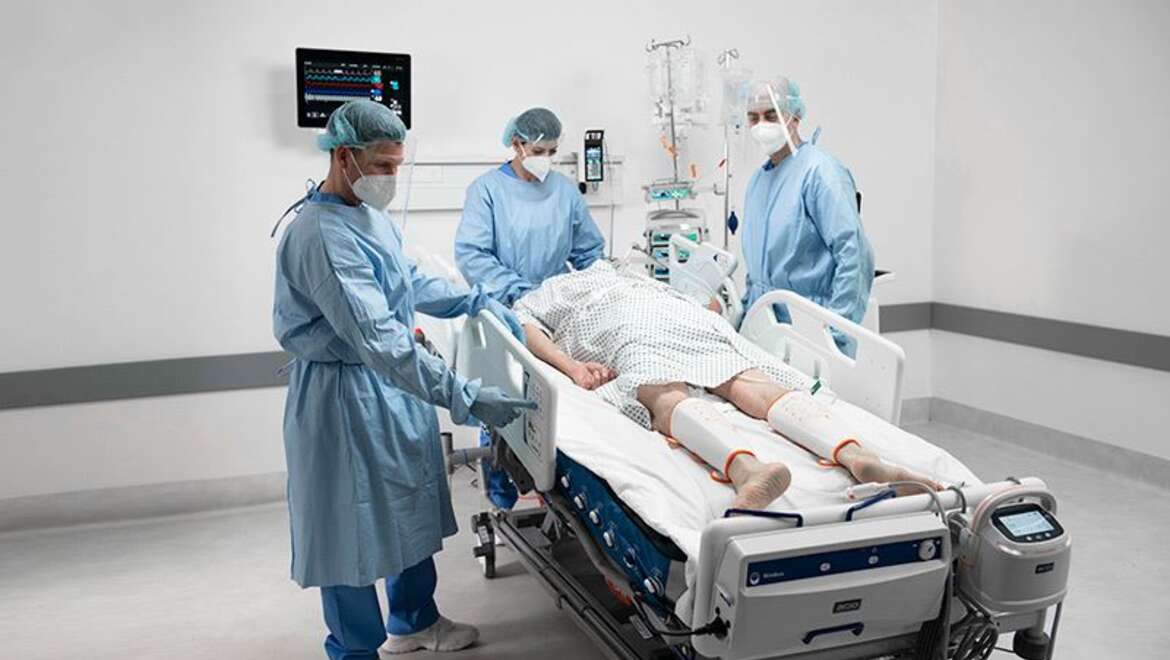
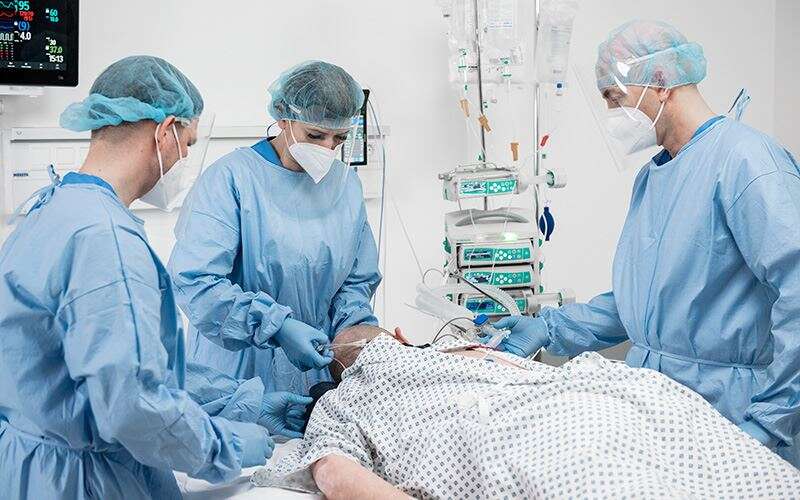
In der Bauchlagerung
Patients often spend up to 16 hours out of every 24-hour period in the prone position⁵. Such lengthy sessions are associated with an increased risk of pressure injury.⁶

Arjo Insight: Setzen Sie maßgeschneiderte Lösungen dort ein, wo sie den größten Mehrwert bieten.
Ermitteln Sie die versteckten Risiken in Ihrer Pflegeumgebung und konzentrieren Sie Ihre Ressourcen auf die Bereiche, wo sie die größten Auswirkungen haben – alles auf der Grundlage von Daten aus Ihrer Einrichtung.

Wo liegen die
Risiken in Ihrer Einrichtung?
Unser Arjo Mobilitätsrisiko-Indikator-Tool hilft Ihnen dabei, Bereiche zu identifizieren,
in denen hinsichtlich der Pflege Leistungsdefizite bestehen könnten, und Sie erhalten
einen maßgeschneiderten Bericht, der Sie bei Ihren nächsten Schritten zu einem
sichereren und nachhaltigeren Risikomanagement unterstützt.
Quellen
- Papazian, L., Aubron, C., Brochard, L., Chiche, J., Combes, A., Dreyfuss, D., Forel, J., Guérin, C., Jaber, S., Mekontso-Dessap, A., Mercat, A., Richard, J., Roux, D., Vieillard-Baron, A. und Faure, H., 2019. Formal guidelines: management of acute respiratory distress syndrome. Annals of Intensive Care, 9(1).
- Bamford, P., et al., 2019. Guidance For: Prone Positioning in Adult Critical Care. Intensive Care Society and Faculty of Intensive Care Medicine.
- Richardson et al., 2019. Perspectives on preventing musculoskeletal injuries in nurses: A qualitative study. Nursing Open.
- Wiggermann, N., Zhou, J. and McGann, N., 2020. Effect of Repositioning Aids and Patient Weight on Biomechanical Stresses When Repositioning Patients in Bed. Human Factors: The Journal of the Human Factors and Ergonomics Society.
- Guerin C, et al., 2013. Prone positioning in severe acute respiratory distress syndrome. N Engl J Med.
- Girard R, Baboi L, et al., 2014. The impact of patient positioning on pressure ulcers in patients with severe ARDS: results from a multicentre randomised controlled trial on prone positioning. Intensive Care Med.
Produkte in dieser Lösung

_Product_Node_Hero_Image.jpg)
